
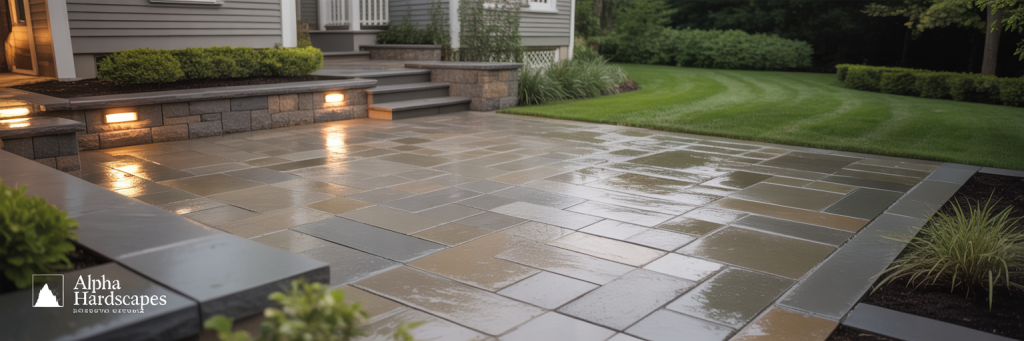
Hardscaping and paver projects turn yards into usable outdoor living spaces. This guide walks homeowners through material choices, site preparation, drainage and frost‑line considerations, realistic costs and timelines, contractor selection questions, and a practical maintenance checklist to extend the life of your investment.
Quick definition — what is hardscaping?
Hardscaping refers to non‑living elements in landscape design: patios, walkways, driveways, retaining walls, steps, seating walls and features such as fire pits or outdoor kitchens. Pavers are modular units (concrete, brick or natural stone) used to construct these features.
How a properly installed paver system works (mechanism)
- Subgrade and grading: The natural soil (subgrade) must be graded to provide positive drainage away from structures.
- Compacted base: A stable, compacted aggregate base (usually crushed stone) provides structural support and prevents settlement.
- Edge restraint: Strong edge restraints hold the pavers in place and stop lateral movement.
- Joint material: Polymeric sand or compacted fine sand locked in joints stabilizes pavers and resists weed growth.
- Surface finish and sealers: Optional sealing protects color and reduces staining; it does not replace proper base work.
Material choices — pros and cons
Concrete pavers
Pros: Cost‑effective, wide range of colors and shapes. Cons: Can fade; needs proper base and compaction.
Natural stone (bluestone, slate, flagstone)
Pros: Premium appearance and long life. Cons: Higher cost and heavier—installation requires skilled crews and more base work.
Brick pavers
Pros: Timeless look and durability. Cons: Fewer modern pattern options and can be costlier than basic concrete pavers.
Typical costs & timeline (US, regional variance applies)
- Small patio (10’×10′): $2,500–$7,000
- Medium patio (20’×20′) with features (fire pit/seat wall): $8,000–$25,000
- Paver driveways: $10,000–$30,000+
- Retaining walls: $50–$200 per linear foot (depends on height, drainage and materials)
Timeline: Simple installs take days; larger projects (grading, retaining walls, engineered drainage) may take multiple weeks plus permit/inspection time.
Design priorities — function before finish
- Define use zones: seating, cooking, circulation.
- Confirm drainage and slope early to avoid pooling and freeze‑thaw issues.
- Use borders, contrasting patterns or soldier courses to frame spaces and create curb appeal.
- Add lighting and planting to extend usability and soften edges.
When to DIY vs hire a professional
DIY works for small, level projects if you have experience in grading and compaction. Hire a pro if the project requires significant grading, retaining walls, engineered drainage, heavy natural stone, or when you need permits, warranty and commercial‑grade equipment.
Maintenance checklist — keep pavers lasting decades
- Sweep sand back into joints; use polymeric sand if specified.
- Clean oil, rust and organic stains promptly with recommended cleaners.
- Re‑seal every 2–5 years depending on exposure and product.
- Control weeds via joint maintenance or targeted herbicide (follow label instructions).
- Inspect edge restraints and base after extreme weather; repair small movement immediately.
Common misconceptions (myth vs. fact)
- Myth: Sealer prevents all maintenance.
Fact: Sealer helps color and staining but does not fix poor base or drainage. - Myth: Any sand will keep joints stable.
Fact: Joint material choice (compacted sand vs polymeric sand) affects weed control and stability. - Myth: Thicker pavers alone support vehicles.
Fact: Driveways need a thicker, well‑compacted base and specific edge restraint — not only thicker pavers.
Risk transparency — what can go wrong and how to reduce it
- Poor compaction → settlement/uneven surface. Mitigation: proper base and mechanical compaction.
- Poor drainage → standing water and freeze‑thaw heave. Mitigation: grade to drain, install drains where needed.
- Incorrect edge restraints → lateral spreading. Mitigation: install fixed restraints (concrete, steel or commercial edging).
Questions to ask any contractor before hiring
- Are you licensed and insured? Request certificates and workers’ comp proof.
- Can you show references and photos of similar projects? (Ask for recent local examples.)
- Does the quote include site prep, base depth, materials, edge restraints, drainage and cleanup?
- Who handles permits and inspections (if required)?
- Is there a written workmanship warranty and what does it cover?
Local next steps — Southern Connecticut homeowners
Start with a site visit and a clear scope. Ask for an itemized estimate that lists base depth, materials, joint treatment and drainage. For local resources and related topics on this site, see:
- Walkway & Patio Pavers
- Retaining Walls (stone & block)
- Masonry Repairs & Maintenance
- Landscaping Services — for integrated grading and planting
- Contact Alpha Hardscapes — request a site estimate or ask for engineered details
Frequently Asked Questions
How long do pavers last?
Properly installed pavers with a well‑compacted base can last decades; natural stone can last a lifetime with routine maintenance and good drainage.
Do I need a permit?
Permits depend on municipality, project size and walls that exceed local height limits. Ask the contractor to confirm permit requirements for your town in Southern Connecticut.
Will pavers heave in winter?
Heaving is usually caused by water movement in the base (poor drainage) or inadequate compaction. Proper grading, base preparation and edge restraint greatly reduce the risk.
Can I drive on pavers?
Yes—driveways require a thicker base, generally deeper compacted aggregate and heavy‑duty edge restraints. Specify vehicular‑rated installation when requesting quotes.
How do I get accurate quotes?
Request at least two detailed, itemized quotes that list base depth, aggregate type, edge treatment, joint material, drainage approach and warranty. Compare line‑item details, not just total price.
Conclusion — prioritize base, drainage and experienced installation
Hardscaping is a high‑impact investment. To maximize longevity and minimize maintenance, prioritize proper grading, a well‑designed compacted base, and an experienced contractor who provides a clear, itemized scope and warranty.