
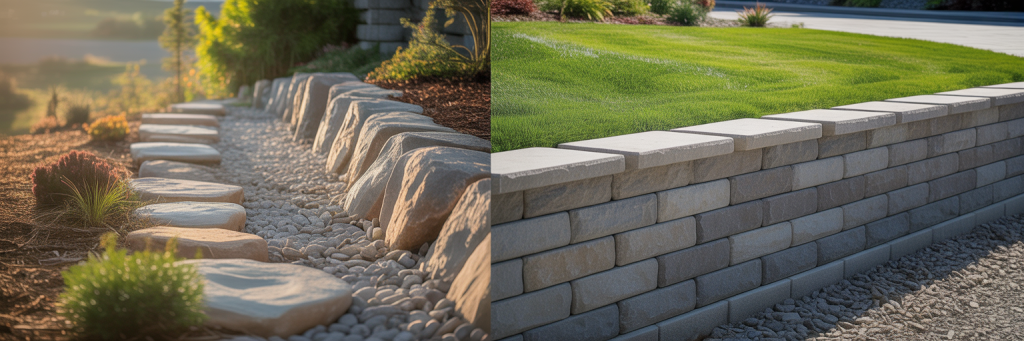
Why this comparison matters for your yard
If you are deciding between natural stone vs wall block retaining walls, you are balancing appearance, cost, and long term performance. Many homeowners prioritize looks at the start and discover problems later when drainage or settlement appear. On one local guide the typical retaining wall cost range is listed as $50 to $200 per linear foot, which shows how quickly choices affect your budget. You need a clear, practical comparison so you can pick the solution that fits the slope you have, the load behind the wall, and the level of maintenance you want.
At a glance: natural stone versus wall block
This quick table explains the core differences you should know before a quote.
- Natural stone: Premium appearance, long lifespan when installed correctly, heavier units require skilled crews and careful base work.
- Wall block: Modular concrete or manufactured units designed for ease of installation, often less expensive per foot and engineered for consistent results.
- Cost signal: Expect a wide price spread. Retaining walls can range from $50 to $200 per linear foot depending on height, drainage needs and material choice.
Natural stone vs wall block retaining walls: cost and timeline
The primary budget driver is labor. Natural stone is heavier and irregular, so installation times are longer. A simple low wall can be completed in a few days. A taller, engineered wall commonly requires multiple weeks and may require permits and inspections. The site guide we reviewed notes that simple installs take days, while larger projects with engineered drainage may take multiple weeks plus permit time.
Material costs alone do not tell the full story. Wall blocks are often cheaper to handle and faster to install. Natural stone often costs more per linear foot because of handling and the skilled labor premium. When you compare quotes, ask contractors to itemize base depth, drainage, and stormwater provisions rather than comparing only line item material prices.
Structural performance and drainage
How a wall manages water is the single most important technical factor for long term stability. Both natural stone and wall block walls must be built with a compacted base, proper backfill, and a drain at the footing to avoid hydrostatic pressure that causes bulging or failure.
- Engineered block walls: Many modern block systems include integrated drainage channels and geogrid tieback systems that make it straightforward to engineer taller walls with predictable results.
- Dry stacked natural stone: When built correctly, dry stacked stone breathes and drains well. But if the funding or crew experience is limited, gaps and inconsistent bedding can create localized settlement.
- Frost and freeze: In cold climates a well compacted base and attention to drainage reduce freeze and thaw movement. The same site guide recommends prioritizing base and drainage above finish materials for long life.
Aesthetics and property value
Natural stone has an unmistakable, custom look that many homeowners prefer. It tends to read as more permanent and can improve curb appeal in a way that photos and catalogs rarely capture. Wall block systems offer consistent, repeatable finishes that can mimic some stone looks at a lower cost. If you care about a completely natural, irregular face that blends with rock outcrops or mature landscaping, stone is the better choice. If you want clean lines, predictable color, and a faster install, block is the practical option.
Maintenance and lifespan
Both wall types can last for decades when built correctly. Natural quarried stone can last a lifetime, but only if the structural work is right. A common local repair category is movement caused by poor backfill or missing drains. Block walls can also last a long time because they are manufactured to consistent tolerances, and many systems offer replacement parts or caps that are easy to match.
- Inspection cadence: Inspect walls annually for bulging, cracking, or ponding water at the base. Early intervention prevents large repairs.
- Vegetation: Limit root systems behind walls. Plants that establish inside the backfill create pressure and moisture pathways that lead to problems.
- Repairability: Small repairs to a block wall are often faster because units are uniform. Repairs to natural stone require matching and careful resetting.
Permitting, engineering and site constraints
Local rules often dictate when an engineered plan is required. A site resource on the same site notes that permits depend on municipality and on heights that exceed local limits. Expect to involve an engineer for walls over a certain height or where surcharge loads, such as driveways or structures, apply behind the wall.
If your site has poor soils, a high groundwater table, or heavy loads, an engineered block wall with geogrid tiebacks may be the safe, cost effective choice. If you have a modest hillside and want a high end landscape feature, natural stone may be feasible without heavy engineering if drainage and compaction are well handled. Ask your contractor to confirm permit requirements for your town early in the process to avoid schedule slips.
Which should you choose by use case
Decide based on three practical questions: how high is the wall, what will be behind it, and how much maintenance are you willing to accept?
- Low decorative walls under 3 feet: Natural stone or stacked block both work. Choose stone for a custom look and block if you want speed and lower labor cost.
- Functional walls that retain soil for a lawn or terrace: Wall block with engineered reinforcement is often the better option. The engineered systems make tiebacks and drainage more predictable.
- Tall walls, or walls supporting driveways and structures: Choose an engineered block system or a professionally designed stone wall with structural reinforcement and a licensed engineer sign off.
How to evaluate contractor quotes
Price matters, but scope and details matter more. Use these checklist items when reviewing bids.
- Written scope: Confirm base depth, aggregate type, drainage details, geogrid or reinforcement, and finish materials are listed.
- References and photos: Ask for recent local examples of the same material and similar site conditions.
- Permit handling: Confirm who secures permits and coordinates inspections. A local guide recommends asking contractors to confirm permit requirements in your town.
- Warranty: Ask about workmanship warranties and what they exclude. Long warranties often come with licensed installers and engineered designs.
For more guidance on contractor conversations and what to ask, see a linked checklist on questions to ask a contractor when hiring for patios and retaining walls: questions to ask a contractor.
Step by step: choose the right wall for your project
Step 1: Confirm the wall height and loads
Measure existing slope and any surcharges. A wall over 3 to 4 feet or supporting a driveway likely needs engineered reinforcement. If the height is low and cosmetic, you can consider either material with less structural complexity.
Step 2: Ask for itemized proposals
Get at least two detailed bids that list base depth, aggregate, drainage, and installation time. Comparing line items reveals where contractors cut corners and where real cost differences occur.
Step 3: Check sample installations
Visit completed jobs when possible. Natural stone requires assessing how the installer fits irregular units. Block systems require checking grout, cap fitting, and whether geogrid was used where specified.
Step 4: Plan for drainage and access
Confirm that a drain at the footing is included and that the contractor plans for positive drainage away from foundations. If equipment access is limited, factor that into the cost because stone handling may require more labor and time.
Common objections and trade offs
Some people assume stone is always better. It is not always the right choice. One uncomfortable truth is that a poorly built stone wall fails faster than a well engineered block wall. On the other hand, some designers and homeowners will accept higher cost and complexity for the visual payoff of stone. The right choice recognizes both aesthetics and structural needs.
Frequently Asked Questions
How do costs compare between natural stone and block retaining walls?
Costs vary widely. Typical retaining wall prices on the site fall between $50 and $200 per linear foot. Natural stone tends to be at the higher end because of handling and labor. Wall block systems typically offer lower installed cost and faster timelines for similar wall heights.
Do I always need an engineer for a tall retaining wall?
Not always. Local rules and the wall height determine the requirement. If the wall retains significant soil, supports a driveway, or sits near structures, engaging an engineer is the safe option. If it is a low garden wall with no surcharge loads, a competent contractor may follow standard good practice without full engineered drawings.
Which wall type requires more maintenance over time?
When installed correctly both types require little maintenance. The higher maintenance risk is poor drainage or weak backfill, not the facing material. Regularly inspect walls for bulging or standing water and address issues early to avoid costly repairs.
Can wall block mimic the look of natural stone?
Yes. Many modern block systems are molded and colored to resemble natural stone. They offer consistent sizing and often faster installation. If authenticity of texture is critical, quarried stone is still unmatched.
What are signs a retaining wall needs repair?
Look for bulging faces, leaning, open joints, cracks in nearby pavement, or new ponding at the base. These indicate movement and warrant immediate evaluation by a contractor to determine if limited repair or full rebuilding is needed.
Useful resources and internal references
If you want to read more about retaining wall construction and finishes, the site maintains a dedicated page on retaining walls that covers stone and block options in more technical depth: retaining walls (stone & block). For guidance on matching a wall to adjacent paving or landscape projects, see the page about walkway and patio masonry: walkway and patio projects.
Conclusion
Choosing between natural stone vs wall block retaining walls comes down to three realities: the wall height and loads, how much you value a custom look, and how much time and budget you can allocate to proper drainage and base work. If you want a high end, irregular appearance and are ready to invest in skilled installation, natural stone rewards you visually. If you need predictable structural performance, easier installation, and often lower installed cost, an engineered block system is the pragmatic choice. Start by getting two itemized proposals that list base, drainage and permit handling so you can compare apples to apples.