
Why plan hardscape upgrades before fall Connecticut
If you are searching for hardscape upgrades before fall Connecticut, start scheduling now. Late summer and early fall offer the most reliable window to complete excavation, compaction, and concrete curing before repeated freeze and thaw cycles begin. For a scoped estimate and seasonal scheduling that matches local permit timelines, visit our main service page.
What makes fall the best season for fall patio projects CT
Connecticut typically reaches first hard-freeze conditions from mid-October to early November depending on coastal exposure, so completing ground-disturbing work by early October reduces frost-related settlement. NOAA climate normals show regional variation in freeze dates, so use the local average for planning a href=”https://www.ncdc.noaa.gov/cdo-web/datasets”NOAA Climate Data/a. Contractors also have more reliable field days and easier access to aggregates and equipment in late summer, which shortens project timelines.
Top late summer hardscape ideas and quick wins
Late summer hardscape ideas can be both practical and high-impact. These projects either prevent winter damage or improve usability immediately.
- Paver joint stabilization and sealing: Apply polymeric sand and sealer during warm, dry days to lock joints and reduce winter washout.
- Install low-voltage lighting: Add step and path lights and test timers while nights are getting shorter so you can adjust placement before winter.
- Add edging and gravel transitions: A narrow gravel buffer between lawn and patio reduces erosion and makes snow clearing easier.
- Pre-install conduit for future electrics: Run conduit now for future lighting or outdoor kitchen power to avoid disrupting finished surfaces later.
Priority projects you should finish before the ground freezes
Not every hardscape job carries the same seasonal risk. Prioritize work that depends on solid base compaction, curing, or long dry periods.
- Drainage corrections and French drains: Regrading and subsurface drains protect patios and foundations from pooling and ice damage. The EPA and local stormwater resources provide guidance on runoff control a href=”https://www.epa.gov/nps”EPA Nonpoint Source Pollution/a.
- New paver patios and walkways: These require a properly compacted crushed-stone base and edge restraint, which perform best when installed before freeze.
- Retaining walls and steps: Footings and base compaction should be completed in warm conditions to avoid future settling.
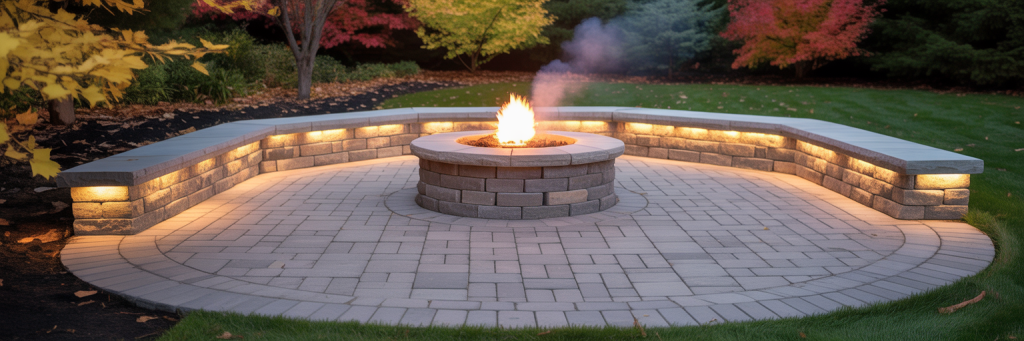
- Masonry fire features: Mortar and concrete cures more predictably before cold weather and limit frost-related cracking.
Materials that perform best for fall patio projects CT
Your material choice changes installation detail and winter resilience. For a full comparison of typical options and local recommendations, see our material guide at a “Best Patio Materials in Connecticut/
- Concrete pavers: Designed for freeze-thaw climates when installed on a properly prepared base. The Interlocking Concrete Pavement Institute offers installation guidelines for base depth and edge restraint a href=”https://www.icpi.org”ICPI/a.
- Natural stone: Durable and attractive when set on a stable bedding. Sealing and correct joint selection reduce salt damage.
- Stamped concrete: Cost effective for large areas, but it needs control joints and proper subbase to resist cracking in New England winters.
Cost table: typical Connecticut ranges for common upgrades
| Project | Common CT cost range | Typical timeline | Seasonal urgency |
|---|---|---|---|
| Paver patio (per sq ft) | $15 to $45 | 1 to 5 days for 200 to 600 sq ft | High |
| French drain | $1,000 to $6,000 | 1 to 4 days | High |
| Masonry seating wall | $2,000 to $8,000 | 2 to 7 days | Medium-High |
| Fire pit (installed) | $1,200 to $6,000 | 1 to 3 days | Medium |
| Outdoor lighting | $500 to $3,000 | 1 to 3 days | Medium |
Step-by-step schedule to finish hardscape upgrades before fall
Week 1: Site review and permits
Start with a site assessment to confirm grading, utility locates, and permit needs. Connecticut towns vary on permit lead times. Early verification prevents last-minute delays.
Weeks 2 to 4: Groundwork and drainage
Complete excavation, base placement, compaction, and any subsurface drainage. For paver installations, contractors follow ICPI guidance on base and bedding to limit future settlement
Weeks 3 to 6: Surface installation and trades
Install pavers, walls, steps, and integrate gas or electrical work for fire features and outdoor kitchens. Schedule inspections for gas or electrical work in advance.
Final week: Sealing, grading verification, and client walkthrough
Seal pavers if the temperature window allows. Confirm final grading, clean joints, and document warranties and maintenance instructions for winter care.
DIY versus professional installation: what to tackle yourself
DIY is appropriate for small, nonstructural tasks. When base performance, drainage, or code compliance matters, hire a pro. For in-depth planning and professional installations that meet Connecticut code, see our planning guide at Hardscaping Pavers Planning Guide
| Task | DIY suitability | Why hire a pro |
|---|---|---|
| Applying sealer | Good | Large areas or tricky drainage may need professional prep |
| Small kit fire pit | Possible | Gas hookups and masonry finishes benefit from licensed trades |
| Paver patio with heavy use | Poor | Proper base compaction and edge restraint are technical |
| French drain installation | Poor | Incorrect slope or outlet selection can worsen drainage |
Maintenance to protect new hardscapes through winter
After installation, follow a concise maintenance plan:
- Confirm grading: Make sure water leaves the patio and does not pond near foundations.
- Replace or add joint sand: Check joints and top up polymeric sand in areas that show erosion.
- Use appropriate deicing: Avoid chloride-based salts on sensitive natural stone and consult manufacturer guidance on approved products.
- Store cushions and covers: Protect built-in appliances and soft goods to prevent moisture damage.
Local examples and internal resources
We have documented projects and material comparisons that show how Connecticut soils and municipal rules influence design choices. Browse our West Hartford notes at West Hartford project and our backyard remodel ideas at Backyard Remodel Ideas CT/for similar scopes and budgets. For a focused estimate on labor and materials tailored to your town, consult our patio cost guide at Patio Installation Cost CT guide
Common questions homeowners ask
How late can I install a paver patio in Connecticut?
A safe rule is to complete base compaction and surface work by early October in most Connecticut locations. Local microclimates, such as coastal areas, may allow a few extra weeks, but curing and settling are more predictable earlier.
Will drainage fixes reduce frost heave?
Yes. Eliminating standing water and routing subsurface runoff away from patios reduces the amount of water in the base. Less water means less freeze-thaw expansion and lower risk of frost heave.
Can I use rock salt on my new patio?
Not on all surfaces. Rock salt can stain and deteriorate some natural stones and even affect paver jointing materials. Use sand for traction or manufacturer-approved deicers for your material type.
What is the lifespan of a well-installed paver patio in Connecticut?
A properly installed paver patio with good drainage and joint maintenance can last decades. Longevity depends on material selection, base preparation, and how well freeze-thaw and deicing impacts are managed.
How do permits affect scheduling?
Permits and utility locates can add 2 to 4 weeks to schedules in some towns. Start with a site assessment early to confirm what inspections or engineered drawings might be required for walls, steps, or gas work.
Should I schedule lighting and outdoor kitchen work before winter?
Yes. Low-voltage lighting and gas or electrical work are easier to coordinate while exterior trades are available. Completing them before winter allows systems to be tested and adjusted in mild weather.
Conclusion
Hardscape upgrades before fall Connecticut give you the best chance to achieve a durable, well-draining outdoor space that withstands winter conditions. Prioritize drainage corrections, base preparation, and any work that requires curing. Use local standards and installers familiar with Connecticut soils and permitting.