
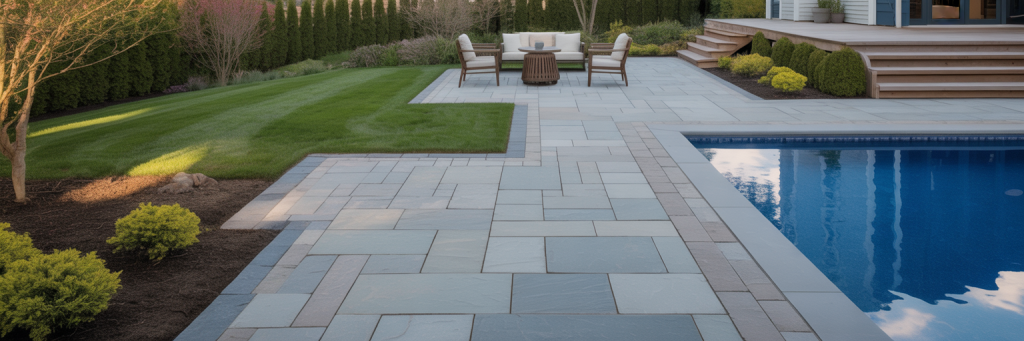
Why the best patio materials Connecticut homeowners choose matters
The best patio materials Connecticut homeowners select must survive frequent freeze-thaw cycles, heavy rain events, and local soil conditions while matching your design and budget. For a local primer and examples of finished projects, see the Walkway & Patio Connecticut service page Walkway & Patio Connecticut. This guide compares pavers, natural stone including bluestone, brick, and poured concrete, and explains drainage, freeze-thaw prevention, and pool-area choices so you can make a confident mid-funnel decision.
What Connecticut weather demands from patio materials
Connecticut has cold winters with repeated freeze-thaw cycles that cause ground movement. That makes base preparation and drainage more important than the surface material. The National Oceanic and Atmospheric Administration documents regional freeze-thaw patterns, and the US Geological Survey outlines how frost heave works (USGS on frost heave). In short, a stable, well-draining base and clear slopes away from foundations prevent most seasonal movement.
How to choose: quick material decision checklist
Before the material mix, confirm three practical site facts: soil drainage and grading, how close the patio sits to the house and any pool, and whether large equipment access is possible. Those answers narrow choices immediately.
- Drainage: If water pools, prioritize correcting slope and adding subdrainage before picking a finish.
- Freeze-thaw exposure: Surfaces that crack are less forgiving where frost heave is common.
- Pool areas: Choose slip-resistant finishes and materials compatible with pool chemicals.
Pavers vs stone patio: key differences for Connecticut
When evaluating pavers vs stone patio options for CT, two facts decide durability: the subbase and edge restraint, and whether pieces are modular. Concrete pavers are manufactured to uniform sizes and interlock, which reduces movement when installed correctly. Natural stone like bluestone or flagstone offers a premium look but requires extra skill to set each piece on a consistent, compacted base. The site ‘Hardscaping & Pavers: Planning, Installation, and Long-Term Maintenance’ on this site already covers base work in detail Hardscaping & Pavers guide.
Bluestone patio CT: appearance and performance
Bluestone patio CT is popular for its blue-gray tones and natural texture. For Connecticut, choose thicker bluestone pieces and bed them on a gravel and crushed stone base with a fine bedding layer to minimize movement. Bluestone is less forgiving than interlocking pavers if the base shifts, but when installed properly it delivers exceptional longevity and resale appeal. For local examples and installation approaches, our Walkway & Patio Connecticut page includes regional projects and design notes Walkway & Patio Connecticut.
Brick patio CT: classic look, proven track record
A brick patio CT offers a timeless aesthetic and good durability. Choose high-quality kiln-fired bricks rated for freeze-thaw climates and ensure the base is deep enough to resist frost heave. Brick absorbs some moisture so proper joint sealing or tight compaction helps limit salt or winter chemical damage. Brick works well for smaller patios and formal patterns.
How freeze-thaw and frost heave change installation decisions
Freeze-thaw means water expands in cold temperatures and can lift poorly supported pavers or slabs. That is why professional installers in Connecticut increase base depth and use compacted, open-graded aggregates that shed water. The critical steps are positive surface slope away from the house, a compacted base layer, and edge restraints. If subsurface water collection is present, a subdrain tied into the landscape drain system is often required.
Drainage and foundations: real homeowner concerns from the field
Local homeowners often discover standing water or minor basement seepage during grading and renovation. A recent homeowner thread on Reddit discussed repurposing existing gravel, dealing with basement seepage, and whether to install a plastic water barrier under new hardscape. The three lessons:
- Repurposing existing gravel can save disposal cost but you must check compaction and contamination first.
- If you see water seepage near the foundation, grading and a drainage plan are higher priority than the patio surface.
- Users argued about plastic barriers. Some recommend them for specific situations, while others warn they can trap moisture where you do not want it. This debate underlines the need for a site-specific drainage solution rather than a one-size-fits-all membrane.
Pool areas: best materials and safety notes
Pool decks need slip-resistance and material stability under chemical exposure. Concrete pavers with textured finishes or bluestone with a honed, non-slip finish are common choices. Avoid very smooth natural stones that become slippery when wet. Also plan for expansion joints and water run-off to keep chemical-laden runoff away from planted beds or foundations.
Estimated costs and real regional numbers
The sites existing project estimates provide a useful regional frame: a small patio around 10 by 10 feet can run $2,500 to $7,000 while a larger 20 by 20 foot patio with added features typically falls between $8,000 and $25,000 (Alpha Hardscapes project estimates). Material choices and base work are the primary drivers: a premium bluestone patio will be on the high end while basic poured concrete will be on the low end.
Installation tips that matter in Connecticut
- Base depth: Compact crushed stone base to engineer load and frost resistance; depth often ranges from 6 to 12 inches depending on use.
- Edge restraint: Use concrete, metal, or heavy-duty plastic restraints anchored to prevent lateral spread.
- Joint treatment: Polymeric sand for pavers reduces weed growth and improves stability in freeze-thaw areas.
- Surface slope: Maintain 1/8 to 1/4 inch per foot slope away from structures for positive drainage.
Maintenance and long-term care
Maintenance is simple but regular: keep joints filled, clean stains quickly, and reseal where recommended. Proper maintenance extends life significantly. Our local maintenance and repairs page covers service options for existing patios Patio maintenance and repairs.
Quick decision flow: which material should you choose?
- If you want lowest initial cost and fast install: poured concrete with good control joints.
- If you want durability and easy spot-repair: concrete pavers are the safest general choice.
- If you want premium appearance and enduring resale value: bluestone or flagstone, budget for thicker stone and skilled installation.
- If you want a traditional look with good longevity: quality brick pavers on a compacted base.
Frequently Asked Questions
Will pavers heave in Connecticut winters?
Pavers can heave if the underlying base holds water or was not compacted. Proper base construction using open-graded aggregate and careful compaction reduces the risk. Edge restraints and joint material like polymeric sand also help keep pavers locked together and resist movement.
Should I put a plastic water barrier under my patio to protect the foundation?
Not always. The Reddit thread about gravel and water barriers shows homeowners are split on this. A plastic membrane can block water but may trap moisture in the wrong place. Most professionals recommend fixing grading and installing subdrains when needed rather than relying on a blanket membrane.
Is bluestone a good choice for a Connecticut patio?
Bluestone is an excellent aesthetic and durable option when bedded on a proper aggregate base. It is thicker and heavier than manufactured pavers so installation requires more skill and often higher costs, but the end result is long-lasting when done correctly.
Pavers versus stone patio: which lasts longer?
Both last decades when installed with a correct base and drainage. Concrete pavers are easier to repair by replacing individual units. Natural stone is extremely durable but may need periodic resetting. The decisive factor is the installation quality, not only the surface material.
Can I use the same material around my pool and the house foundation?
Yes, but choose finishes that are slip-resistant for pool areas and ensure chemical-resistant stone or sealer where pool salts and chlorine runoff occur. Always slope surfaces away from the house and design drainage to handle pool splash and rainwater.
Conclusion
Choosing the best patio materials Connecticut homeowners rely on means balancing aesthetics, budget, and technical resilience to freeze-thaw cycles and drainage issues. For most homeowners seeking low maintenance and long-term durability, concrete pavers offer the best combination of performance and repairability. If you want a premium surface, bluestone or flagstone is outstanding when installed by experienced crews. Before you pick a surface, confirm grading, base design, and subdrainage so the final patio performs for decades.
If you would like a site assessment and a detailed, itemized quote tailored to your yard and budget, request a free estimate with our team Contact Alpha Hardscapes or explore our Walkway & Patio Connecticut page for local projects and examples Walkway & Patio Connecticut.