
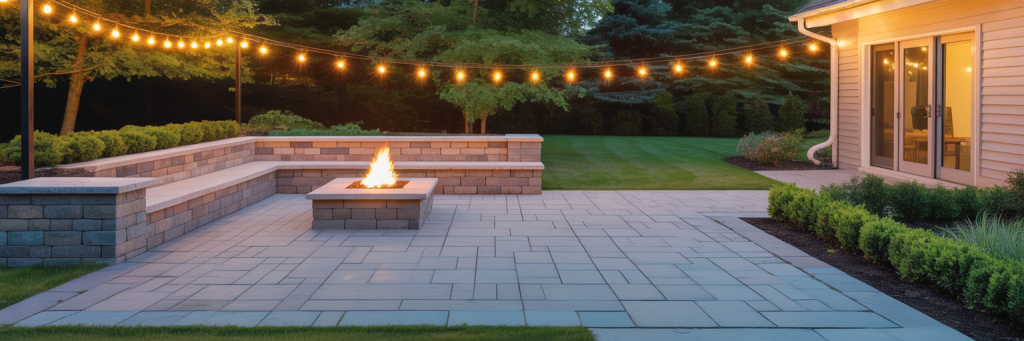
Why patio installation cost Connecticut deserves a careful estimate
If you are budgeting for patio installation cost Connecticut, you have likely seen wildly different quotes. Local variables such as frost depth, drainage needs and town permit rules change prices more in Connecticut than in many parts of the country. If you want a practical local quote, start with a site visit from a trusted team such as our local patio installation services in West Hartford and ask for an itemized estimate that lists base depth, drainage and edge restraint.
Homeowners who skip a detailed scope often face surprise costs during excavation or when a retaining wall is required. Below I break down realistic Connecticut ranges, and a contractor checklist so you can compare like for like.
What drives patio installation cost in Connecticut
Expect the following variables to change your quote markedly. I list typical CT impacts and what to ask your contractor.
- Size and shape: larger, simple rectangles get lower per-square-foot rates than irregular shapes that require many cuts.
- Material selection: natural stone increases material and labor; concrete pavers are a predictable mid-range choice.
- Site prep and grading: poor slopes, tree roots or buried debris add excavation and disposal fees.
- Frost and freeze-thaw protection: Connecticut winters mean deeper base and attention to drainage. This can increase cost by 5 to 15 percent compared with milder climates.
- Access and staging: tight properties that require hand-carrying materials or long equipment walks add labor. Several threads in communities flagged high costs when crews had to park off-site and carry materials in.
- Permits and inspections: town rules vary. Some municipalities require permits for patios over a threshold; include permit fees or permit-handling in the quote.
For base and drainage best practices, see our planning and installation guide on paver base and drainage at Hardscaping & Pavers.
Material comparison: paver patio cost CT versus stone and concrete
Choosing a material is the single biggest lever you control. Below are practical tradeoffs with Connecticut-specific notes.
- Concrete pavers: Pavers are tolerant of small movements and are relatively straightforward to repair. Some homeowner quotes ranged from about $36 per sq ft for standard installs to $58 per sq ft for higher-end pavers and accents.
- Natural stone: Expect $40 to $85 per sq ft installed for bluestone or flagstone. Stone is heavier, needs a more substantial base and often requires more skilled stone-setting to avoid winter heave.
- Concrete slab: Expect $8 to $20 per sq ft installed. Slabs are cost effective but harder to modify later and can crack in freeze-thaw cycles if subgrade is poor.
- Aggregate or gravel: Cheapest installed options but often require edging and more maintenance to keep a clean look and manage runoff.
For technical standards on interlocking paver systems and edge restraint, see the Interlocking Concrete Pavement Institute resources at ICPI. For national price baselines use HomeAdvisor’s patio cost guide at HomeAdvisor.
Labor and contractor pricing: reading a quote
A contractor quote should be itemized. When line items are missing you will see low initial pricing followed by change orders. Typical contractor cost centers include excavation, aggregate base, sand setting bed, paver supply and installation, edge restraint, jointing material and cleanup.
Real quotes reported on community forums include these examples:
- A homeowner paid about $1,400 for a small DIY paver patio after sourcing discounted materials and renting a compactor, showing how much you can save with time and labor.
- Another homeowner posted a $4,300 quote for roughly 190 sq ft, about $22 to $25 per sq ft, which included grading and drainage correction and paver install. This matched local contractor averages of $20
and up for moderate complexity.
- At the other extreme, a large custom project with walls and pillars was quoted at $38,000; complexity, walls and tight access are typical reasons for that scale.
How to compare quotes:
- Require base depth and aggregate type on the estimate.
- Ask how edge restraint is installed and whether polymeric joint sand is included.
- Confirm who handles permits and inspections.
- Get warranty terms and a start and end date.
If you want a detailed local scope, request an on-site estimate from our team at West Hartford patio services. A written, itemized proposal prevents surprises.
DIY or hire a patio contractor in Connecticut
DIY saves labor but not always time or risk. The DIY example above itemized materials and rentals that kept total cost to about $1,400 for a modest area. That homeowner used second
quality pavers and rented a compactor and saw. If your site has significant grading, frost-heave risk, or requires a retaining wall, hire a pro.
If you DIY, account for:
- Compactor rental and time to compact aggregate in layers.
- Dump fees for excavated material.
- Cutting tools and a masonry blade for irregular edges.
- Time to learn correct slope for drainage; improper slope causes expensive rework.
Contractors bring equipment, permits handling and warranty. Some homeowners tried to bargain by supplying materials themselves and paying labor only, which can lower total cost if you source materials carefully.
Seasonality, permits and timeline for Connecticut jobs
In Connecticut, schedule patios in spring and late summer to avoid deep winter and very wet spring windows. Freeze-thaw cycles matter: crews need dry conditions for aggregate compaction and polymeric joint sand to set properly. Permits vary by town; some municipalities require permits for patios over a threshold; include permit fees or permit-handling in the quote.
Check your town building department and ask your contractor to list permits in the estimate. If you prefer self-service research, many Connecticut towns publish permit checklists online and the state building code is available through the Department of Administrative Services pages.
Sample budgets and three real-world case studies
These condensed case studies are drawn directly from community reports so you can match expectations to outcomes.
- DIY small patio, completed cost ~$1,400: homeowner bought discounted pavers, paid $150 for compactor rental and $350 for aggregate and sand. This was a tight budget choice and required several weekends of labor.
- Mid-range contractor job, ~190 sq ft, quote $4,300: included grading, drainage correction and paver install. This matched local contractor averages of $20
and up for moderate complexity.
- Large custom project with walls and pillars, quote $38,000: scope included seat walls, pillars and specialized patterning. Large landscaping features and stonework are where costs rise quickly.
One Connecticut poster asked for recommendations after receiving what they called “outrageous” quotes while targeting a $15k
udget; that reflects real local variation and the importance of itemized bids and three comparable estimates.
How to get accurate quotes: a contractor checklist
Bring these items when scheduling an estimate:
- Site photos and desired dimensions: exact square footage and any access problems.
- Reference images: patterns, border styles and material samples.
- Questions to ask: base depth, aggregate type, edge restraint details, warranty period and who will handle permits.
- Request a line-item quote: excavation, hauling, base, pavers, cutting, edging, jointing, sealer, lighting and cleanup.
Use the questions in our installation guide for a deeper checklist at Updated Guide to Hardscaping & Pavers.
Frequently Asked Questions
How much does patio installation cost per square foot in Connecticut?
Most installed patios in Connecticut range from about $25 to $60 per sq ft for pavers and $40 to $85 per sq ft for natural stone. Concrete slabs start lower around $8 to $20 per sq ft. Local site conditions such as grading or retaining walls push projects to the higher end. Use at least three itemized bids to compare.
Is $7,500 for a 10×20 patio reasonable?
That quote represents about $37.50 per sq ft and can be reasonable if the job includes grading, drainage, higher-end pavers or difficult access. Several homeowners on community forums reported similar per-square-foot figures for comparable work. Confirm the base depth and drainage work included before accepting the price.
Do I need a permit for a backyard patio in Connecticut?
Permit requirements vary by town. Small, ground-level patios often avoid permits, while patios that increase impervious surface or include walls may require them. Ask your contractor to confirm with your municipality and include permit costs on the estimate.
Can I DIY a paver patio and save money?
Yes, if you have time and comfort with grading, compaction and cutting pavers. A documented DIY in community forums completed a small patio for about $1,400 by sourcing discounted pavers and renting a compactor. For larger or complex sites hire a pro to avoid rework from poor drainage or base preparation.
Which holds up better in Connecticut winters: pavers or natural stone?
Both perform well if installed on a proper, well-draining base with good edge restraint. Natural stone can be more frost-resistant but is heavier and requires skilled installation to avoid movement. Pavers are easier to lift and reset if minor settlement occurs.
How much should I budget for drainage and frost protection?
Plan on an additional 5 to 15 percent over basic estimates for proper drainage and deeper base work in Connecticut. Frost and freeze-thaw cycles mean contractors commonly increase base thickness and add drainage features to prevent heave, which adds material and labor cost.
Conclusion
Estimating patio installation cost Connecticut requires local context: material choice, site access, grading needs and town permits all change the price. Use the cost ranges in this guide, collect three detailed quotes, and compare line items rather than totals. Include drainage and frost protection in every quote to avoid expensive corrections later.
Ready to get a local, itemized estimate that reflects your yard and design? Contact our West Hartford team for an on-site evaluation and a written proposal that lists base depth, drainage, materials and warranty.