
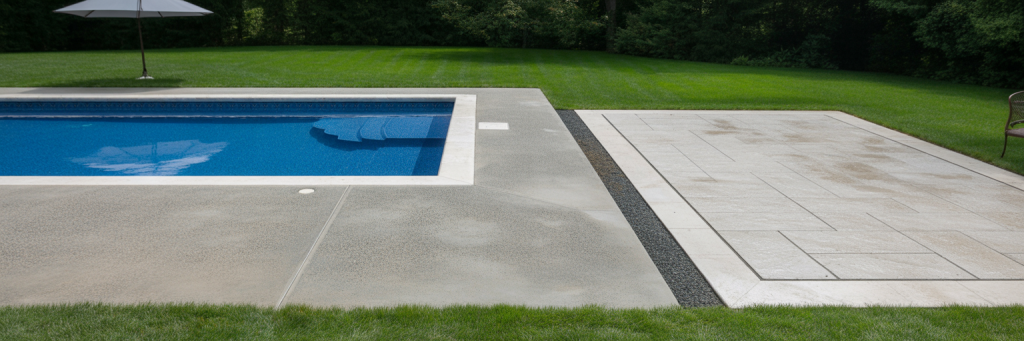
Why choosing the right pool patio materials Connecticut matters
If you are planning a pool patio in Connecticut, the material you choose will determine safety, heat underfoot, drainage and long term maintenance. For local turnkey options and design packages, start with our Outdoor Living Packages Connecticut so your contractor can evaluate frost depth, grading and coping needs on site. The right decision minimizes repairs and keeps kids and guests safe.
Quick comparison table: pavers, stone, concrete
What local homeowners actually complain about
Real user discussions show patterns you should not ignore. One homeowner with about 600 square feet of large stone pavers near a pool reported yearly sand washout and sinking, forcing them to stop inviting guests because the surface became a tripping hazard. Another owner, working from plans that showed 723 square feet, asked how much polymeric sand they needed after power washing — that demonstrates how common joint loss and re-sanding is. A third user described marble or travertine pool decks stained by grease, then successfully using a pumice-based oil and stain remover followed by a color-enhancing sealer. These are not outliers; they highlight the three recurring risks: washout, base failure, and staining.
Why base, drainage and edge restraint matter more than material
The single biggest cause of failure in pool patios is installation errors, not the material alone. A well-graded, mechanically compacted aggregate base, secure edge restraints, and a clear drainage plan reduce heaving, settlement and joint washout. In Connecticut, frost depth and freeze-thaw cycles mean the base must be done to local standards. For best practice guidance on those steps, see our detailed hardscaping resource at Hardscaping planning and installation.
Pavers around the pool: when they are the right choice
Pavers are modular concrete or brick units set on an engineered base. They are a strong choice when you want repairability and texture for traction. Because individual units are replaceable, a spot failure does not mean replacing an entire expensive slab. Use polymeric sand or specialized joint systems in splash zones, and insist on edge restraints that lock pavers against lateral movement.
When to prefer pavers
- You want a patterned look or color banding around coping.
- You anticipate future repairs and want easy replacement.
- Your yard has complex grading or small retaining features.
Pain points to plan for
- Joint sand washing out if runoff is concentrated; protect joints and route concentrated flows to drains.
- Improper compaction leads to wobbling and sinking; require mechanical compaction in the scope.
Natural stone pool patios: premium, cool, and maintenance-aware
Travertine and bluestone are prized for a cool surface and a premium finish. They are heavy, so installation requires a skilled crew and a robust base. Porous stones like travertine often benefit from an initial sealer. In one case study, a homeowner used Laticrete Oil and Stain Remover to lift grease, then applied a color-enhancing sealer and found the surface both protected and visually improved. If you select stone, budget for cleaning and resealing every few years depending on exposure.
When to prefer stone
- You value barefoot comfort and a high-end aesthetic.
- You want long surface life and are willing to seal and clean.
Stone caveats
- Light porous stones will stain; address spill-prone areas with easy-clean materials by grills and seating.
- Stone costs more to install and requires heavier base preparation to prevent movement.
Poured concrete: budget-friendly but detail-oriented
Concrete is the most economical option per square foot and allows custom shapes and integrated features. Make sure the finish chosen provides texture for traction. Control joints, proper reinforcement where needed, and surface slope to drains are essential to limit cracking and keep water moving away from structures.
Concrete pros and cons
- Pros: low initial cost, continuous surface, easy to form around pools and patios.
- Cons: can crack in freeze-thaw cycles; can get hot unless light-colored or shaded.
Slip resistance and heat: what to test before you buy
Slip resistance matters most in wet zones. Ask for a wet-barefoot sample and test texture. Thermal-finished natural stone, broom-finished concrete and pavers with a textured surface perform best. For heat, request light color options and consider adding shade features. The National Floor Safety Institute provides testing standards you can reference when evaluating finishes.
Drainage and coping: the overlooked safety items
Coping is the transition between pool shell and patio. It must be structurally sound and comfortable underfoot. Equally important is routing splash and roof runoff away from joints and base. Channel drains, catch basins, or dry-laid stone drainage paths are common solutions. In many Reddit threads, homeowners who did not address concentrated runoff reported joint loss and frequent repairs, so include drainage in the written scope.
Maintenance and lifecycle cost examples
Compare expected service tasks: polymeric sand replacement, sealing stone, and crack repairs. For a 600 to 800 square foot patio, expect to refill joints occasionally and reseal stone every 2 to 5 years. One homeowner with roughly 660 square feet reported using three quarts of a color-enhancing sealer during a reseal project. These are practical numbers to discuss with your contractor so you can budget for routine care.
Local permitting and frost considerations in Connecticut
Confirm local setbacks and whether any pool-related site work requires a permit. Frost depth affects how deep footings, block walls and base layers should be. Ask your contractor to include frost-line details and base depth in the estimate. If you want examples of local work and service areas, view our West Hartford project notes at West Hartford for context on typical Southern Connecticut conditions.
Decision matrix: pick the right material for your priorities
- Prioritize safety and drainage first. No aesthetic is worth yearly repairs.
- If you want repairability and patterning, choose pavers and demand an engineered base.
- If barefoot comfort and cool surfaces matter most, choose natural stone and plan sealing.
- If you need a budget-friendly continuous surface, choose textured concrete with proper control joints and slope to drains.
Frequently Asked Questions
Should I set pavers in concrete around the pool?
Setting pavers in concrete can reduce movement but makes repairs harder and may trap moisture if the slab is not sloped correctly. Many professionals prefer a compacted aggregate base with edge restraints and polymeric joints because that approach is repairable. Ask contractors for local examples of both methods and how they handle drainage.
Why does polymeric sand keep washing away around my pool?
Polymeric sand is washed out when runoff flows directly across joints, when joints were not packed and compacted properly, or when the paver faces were not cleaned before activation. The remedy is engineered drainage, correct joint preparation, and proper polymer activation according to the manufacturer directions.
How hot will the patio surface get on sunny Connecticut days?
Surface temperature depends on material color and texture. Light-colored travertine or bluestone stays several degrees cooler than dark concrete. Test samples in sun at midday before final selection. Adding shade or water features also reduces peak surface temperature.
How will freeze and thaw affect my pool patio?
Freeze-thaw cycles cause heaving when water is trapped in the base or under a slab. A well-compacted aggregate base, edge restraints, and positive slope to drains minimize that risk. Avoid trapping water against the pool shell and include control joints in large concrete pours.
Next steps and how we help
Start with a site visit so we can evaluate grading, drainage and coping details. Our estimates list base depth, joint treatment, and drainage so you compare line items rather than total price alone. For design and installation tailored to Connecticut conditions, request an appointment via our hardscaping guide and the Outdoor Living Packages Connecticut service page linked above.
Conclusion
Choosing pool patio materials Connecticut requires balancing safety, heat, maintenance and budget. Pavers give repairability, stone gives cool comfort, and concrete gives economy. The installation details for base, drainage, coping and edge restraint determine whether your patio will last. If you would like a local quote and an itemized scope that addresses drainage and frost, request a site estimate through our Outdoor Living Packages Connecticut page and we will walk the yard with you.