
Small Backyard Patio Ideas Connecticut Homeowners Can Actually Build
If you are searching for small backyard patio ideas Connecticut that fit tight yards, New England weather, and realistic budgets, this guide collects practical layouts, materials, and local considerations that work. For technical details on base preparation, drainage, and permits, see our Walkway & Patio Connecticut pillar page. Below you will find bistro patio layouts, sitting walls, garden borders, fire pit seating plans, lighting and privacy solutions tuned to Connecticut yards and the common problems homeowners report.
Why Connecticut yards need a different approach
Connecticut winters expose patios to freeze and thaw cycles, and many yards here have clay or shallow topsoil that affects drainage. That means surface choice, base depth, and a smart edge restraint matter more than in milder climates. Our site already explains installation fundamentals in the Complete Hardscaping Guide, which is useful for homeowners planning installation or comparing quotes: Hardscaping & Pavers: Complete Guide. Here we focus on design ideas and local tradeoffs that help you maximize a small footprint.
Quick planning checklist before you design
- Define the primary use: morning coffee, dinner for two, a grilling spot, or a small fire pit for evenings.
- Measure usable space: most bistro patios are 6 to 10 feet across; a comfortable two-person seating area fits within 6 by 8 feet. A freestanding patio that one user planned was about 300 to 350 square feet for a family-oriented layout, which is useful to compare to smaller bistro options.
- Check root and grade constraints: if a mature tree has surface roots, you will need root-friendly solutions described below.
- Plan for drainage: slope 1/8 to 1/4 inch per foot away from foundations and consult the hardscaping guide for base specs and frost-line concerns.
Small patio layouts that fit Connecticut backyards
Choose a layout that matches how you use the space, not only what looks good in a photo.
Bistro patio: tiny, tidy, highly usable
Best for narrow yards or side yards. Use a 6 by 8 foot footprint with a small round table and two chairs. Materials that work well are 12-inch square pavers, bluestone slices, or compacted pea gravel on a stabilized base. Keep circulation clear with a 3-foot wide approach path of stepping stones or a narrow paver runner.
Compact entertaining node with built-in seating
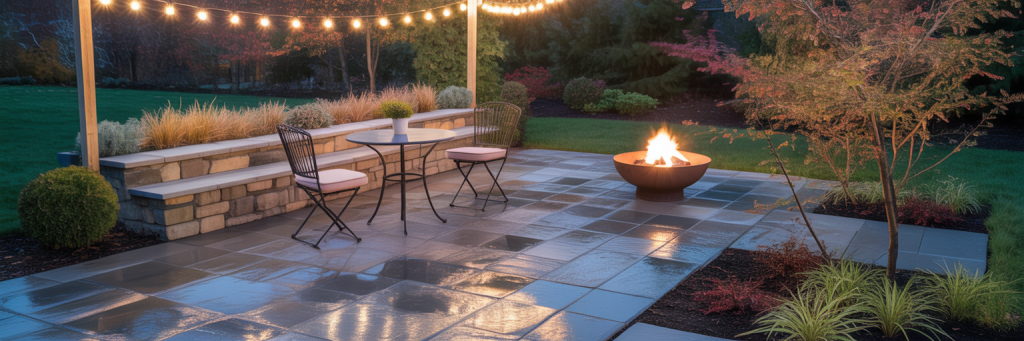
Convert a 10 by 12 foot area into a micro-living room by adding a low sitting wall that doubles as edging and extra seating. A 16-inch deep seat wall built from natural stone or concrete block provides sturdy seating without bulky furniture. This approach is a good alternative if you want a permanent edge against plantings.
Fire pit seating in a small circle
A 10-foot diameter circle can accommodate a small wood-burning or gas fire pit and four chairs. Use permeable pavers with a compacted base for good drainage. Remember that local rules and insurance may regulate open fires in some towns; check municipal ordinances before choosing a wood-burning pit.
Freestanding patio with a walkway connection
Freestanding patios work when you need to avoid building right up to the house because you plan a future addition or want to preserve a window view. A common setup is a 12 by 18 foot curved patio with a stepping stone path to the back door. One homeowner on Reddit described exactly this approach while planning for a future house addition.
Sitting walls and multi-use edges
Sitting walls do three jobs: seating, defining the patio edge, and creating a planting bed. On a small patio, a 12 to 16-inch tall wall sized to act as a seat is comfortable for most adults. Construct from the same stone as your paving for a cohesive look or contrast with a soldier course for a framed effect.
Garden borders and plant choices for tight Connecticut spaces
Use narrow planted strips to soften patio edges. Choose low-maintenance, deer-resistant plants like boxwood, lavender, and ornamental grasses. For year-round structure, mix evergreen boxwood with seasonal accents. If you have pine trees, note a common Reddit pain point: needles and acidic litter make grass and some plantings difficult to maintain. In those cases, favor low-maintenance borders with mulch or gravel and hardier shrubs.
Fire pit seating: safety and layout rules
For small concrete or paver patios that include a fire element, maintain a clear radius of at least 36 inches from combustible surfaces for small gas pits and 48 inches for wood-burning pits. Check local town rules and your homeowner insurance. If you want the look of a central fire feature without the fuss, choose a raised propane pit with an integrated burner ring. That gives instant heat with less cleanup.
Lighting and evening usability
Small patios feel larger when layered lighting is used. Combine low-voltage path lights with wall-mounted sconces on the house and warm LED string lights over a bistro setting. Hardscape-integrated LED strip lighting in a seat wall or step riser adds safety and a custom feeling. Avoid bright white fixtures that wash out the space; aim for 2700K to 3000K warm LEDs for a cozy mood.
Privacy solutions that do not steal space
Privacy is a top concern for many homeowners, including renters who cannot alter permanent structures. Options that work in small CT patios include:
- Planter screens: tall narrow planter boxes with fast-growing shrubs or bamboo in containers provide instant screening and can be removed later.
- Gabion or short stone walls with trellis: a 3 to 4 foot stone wall topped with a lattice offers privacy while doubling as a seating edge.
- Retractable outdoor fabric shades: mount to adjacent posts for evening privacy without permanent changes.
One renter on Reddit described living with a low block wall that made the backyard feel exposed. In that context, planter screens or freestanding trellis panels are low-cost, renter-friendly fixes that add the perception of space while increasing privacy.
Common problems Connecticut homeowners report and how to avoid them
Reddit threads and homeowner forums show consistent pain points that you should plan around.
- Surface roots and tree health: a Reddit user wondered how to place a patio near roots without killing the tree. Solutions include using a floating deck over root areas, adjusting the patio footprint, or using porous paving with a shallow gravel reservoir to avoid severing major roots.
- Pine needles and maintenance: one homeowner replaced lawn with artificial turf because pine needles made turf care difficult. For patios under pines, choose non-porous pavers for easy sweeping or wide-jointed pavers with polymeric sand for easier maintenance.
- Drainage and slope mistakes: poor slope leads to pooled water and heaving. Follow base and grading guidance or consult a local contractor to ensure the patio slopes away from the house.
Comparison: Bistro patio versus Built-in seating with fire pit
| Feature | Bistro Patio | Built-in Seating + Fire Pit |
|---|---|---|
| Typical footprint | 6 x 8 ft | 10 to 12 ft diameter |
| Approximate cost | $1,200 to $4,000 | $6,000 to $20,000 depending on stone and pit type |
| Maintenance | Low | Moderate, especially with wood-burning pits |
| Best for | Small yards, side yards, quick installation | Primary entertaining space, year-round use with proper fuel |
How to choose a backyard patio contractor in Connecticut
When searching for a backyard patio contractor, ask for local references and recent projects in Connecticut winter conditions. Confirm they itemize base depth, edge restraint, drainage, and whether they pull permits when required. Alpha Hardscapes has a local portfolio and licensed crews; for service details see the West Hartford masonry page for examples of durable installations: Skilled Masonry Contractor in West Hartford, CT. Compare at least two contractors and request a written scope that lists materials and warranty.
Budgeting numbers and ROI considerations
Expect a basic small patio to start near $2,500 for a simple gravel or stamped concrete surface and to climb to $8,000 or more for natural stone plus built-in walls or fire features. Industry averages reported by trade guides align with these ranges. Think of patios as functional landscaping that improves outdoor living and adds resale appeal. If you plan to recoup cost, focus on durable materials and cohesive landscape design that complements the home.
Frequently Asked Questions
How big should a small patio be for two people?
A practical bistro patio for two fits within 6 by 8 feet. That gives room for a small table and two chairs plus a narrow circulation path. If you want space for an additional lounger or side table, a 8 by 10 foot footprint is a comfortable next step.
Can I put a patio over tree roots without killing the tree?
Yes, but you must avoid deep excavation that severs major roots. Use a raised floating deck or permeable pavers set on a shallow gravel bed that avoids cutting roots. Consult an arborist for trees you want to preserve to ensure root zone health.
Is pea gravel a good option for small patios in Connecticut?
Pea gravel is affordable and visually light, but it moves under heavy use and requires edge restraint. It works well for informal patios or renters who want an inexpensive, reversible solution. For heavy seating or dining, pavers or bluestone are more stable long-term.
Do I need a permit for a small patio in Connecticut?
Permit requirements vary by town and by project scope. Small, ground-level patios typically do not require building permits, but anything with structural walls, significant grading, or a built-in fire feature may. Ask your contractor to confirm local requirements.
How do I keep a small patio private without losing light?
Use narrow planters with vertical plantings, a low seat wall topped with lattice, or a translucent fabric screen. These solutions block sightlines while still allowing sunlight to reach the patio and adjacent windows.
How much does a contractor typically charge for a small patio install?
Contractor prices vary with materials, site prep, and access. Simple installations can start around $2,500. Expect higher rates for natural stone, retaining walls, or complex grading. Request itemized bids to compare base preparation, materials, and labor line items.
Conclusion
Small backyard patio ideas Connecticut homeowners favor are compact bistro patios, seat-wall designs, and small fire pit circles that make thoughtful use of limited space while addressing local realities such as roots, pine needle maintenance, and freeze-thaw cycles. Start with a clear use case, measure the available footprint, pick materials that suit New England weather, and get at least two itemized quotes from a reputable backyard patio contractor. For installation specs and drainage guidance, consult our Walkway & Patio Connecticut page and our Complete Hardscaping Guide. If you want a quick local consult, request a site visit to get a tailored plan and a written estimate.